Creating Balanced Energy, Economic, and Environmental Values From Waste Carbons
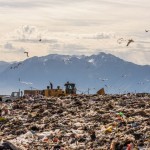
Carbon-based feedstocks are wherever you find them: Montana has over 3.9 million acres of beetle-killed timber. This photo taken in Wyoming could be any place in the western U.S. More info here.
Turning solid waste and excess non-crop biomass or any other carbon feedstock into next-generation biofuels is an environmentally smart and sustainable way to manage America’s solid waste, create valuable energy products, and increase employment and economic activity in our communities.
America’s trash, and non-crop biomass including woody biomass, hazardous waste, coal, petroleum coke, and even sewer sludge can now be safely and economically converted without pollution into higher mixed alcohol fuel products the world needs in great abundance: clean, powerful, higher mixed alcohol biofuel that can be refined in a closed-loop process from any carbon feedstock.
What’s Our Goal?
We seek to build a strong, locally owned and operated infrastructure for processing abundant municipal waste and biomass into clean, renewable and sustainable green energy.
“Biomass is local, so you keep your energy dollars local. I like to call it localization rather than globalization, localization of energy dollars.”
There is a cleaner, safer and more profitable way to handle the huge amount of solid waste generated every day in this country and all over the world. It’s proven technology called Plasma Gasification and Gas to Liquid (GTL) fuel synthesis. There are many variations of the underlying technologies, but the bottom line is this: Feed a plasma gasifier almost anything you would consider trash and you can get abundant, clean (water soluble and biodegradable) higher mixed alcohol biofuel out of the GTL back end, creating almost zero emissions, and the small amount of solids (slag) left from the gasification process can be sold as abrasives, road fill, or even turned into bricks.
We believe this new, closed-loop, non-emitting method of turning waste into green energy is going to happen on a large scale, and soon. In the Bitterroot valley we’re working on being among the first rural areas in America to successfully balance its energy potential, economics and the environment with clean, responsible and profitable energy creation facilities.


