“We cannot pretend that we did not know.”
- James Hansen, NASA Scientist
Like the fact that the U.S. has spent … importing petroleum since 1970? Probably not, unless you’re an oil sheik.
Beyond our world’s present fossil-fuel addiction and teetering national economy, there’s this oft-ignored “externality” known as the natural environment. Dirty energy is clearly creating profound environmental, and economic, problems.
Correspondingly, the state of our planet’s environment is the basis, and the truest measure, of the success of our clean fuel opportunity. Fix problems with the environment due to fossil energy and we’ll help fix the global economy and make money too.
| Greenhouse Gas | Preindustrial level | Current level | Increase since 1750 | Radiative forcing (W/m2) |
|---|---|---|---|---|
| Carbon dioxide | 280 ppm | 388 ppm | 108 ppm | 1.46 |
| Methane | 700 ppb | 1745 ppb | 1045 ppb | 0.48 |
| Nitrous oxide | 270 ppb | 314 ppb | 44 ppb | 0.15 |
| CFC-12 | 0 | 533 ppt | 533 ppt | 0.17 |
Source: Wikipedia
The world environment needs mankind’s help for a change that will benefit all life. We humans need cleaner and more sustainable ways of getting people and goods from point A to point B. The consequences of fossil fuel emissions, pollution and dependency on imported oil are simply becoming too great to ignore.
The need for clean fuels has never been greater. (USDA Biofuels Strategic Production Report – June 2010)
Mankind uses fossil fuels because they are still relatively cheap, and we use the atmosphere as an open sewer to dump wastes for free. Today you can see the results from outer space.
Oil, diesel and gasoline float on water when spilled and their emissions are incredibly toxic when combusted. Gasoline and diesel combustion emissions contribute over half of all greenhouse gas emissions. Beyond this, petroleum-derived plastics foul our oceans, kill animal life, and fill our landfills.
And there are over 50,000 coal-fired power plants worldwide running 24/7, emitting GHGs.
The seven sources of CO2 from fossil fuel combustion are (with percentage contributions for 2000–2004):
| Fossil fuel combustion sources | Contribution (%) |
|---|---|
| Liquid fuels (e.g., gasoline, fuel oil) | 36 % |
| Solid fuels (e.g., coal) | 35 % |
| Gaseous fuels (e.g., natural gas) | 20 % |
| Cement production | 3 % |
| Flaring gas industrially and at wells | < 1 % |
| Non-fuel hydrocarbons | < 1 % |
| “International bunker fuels” of transport not included in national inventories |
4 % |
All of these emissions now threaten to push carbon dioxide over 400 parts per million for the first time in recorded history. Most of these emissions can be lowered dramatically with production, blending and use of our clean biodegradable fuel.
So far, fossil energy emissions have raised the temperature of the planet about 1 degree. The consensus prediction is that without dramatic action to stem emissions, we will see temperatures climb five degrees in this century. Given that a single degree already melts the Arctic, is this a risk anyone can afford to ignore?
We can’t bury or incinerate the truth as easily as we bury society’s wastes, either. We can’t mask the effects of a century of mass consumerism driven principally by cheap fossil energy.
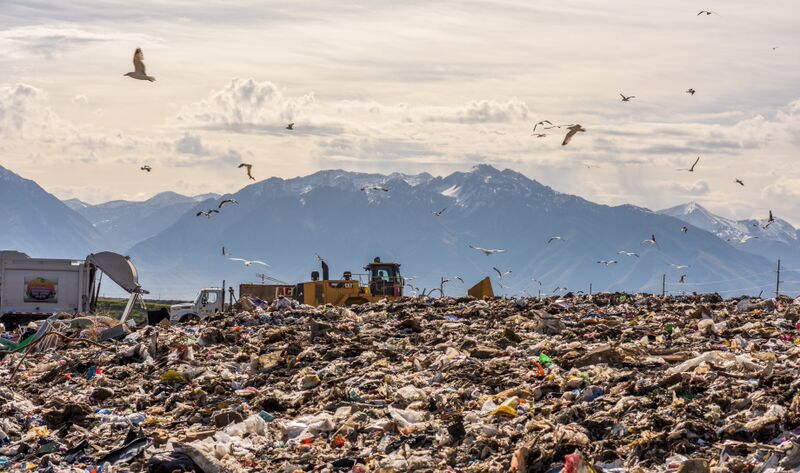
In just one year, Americans generate 250+ million tons of garbage (2005 data). While about 30 percent of it gets recycled or composted, 164 million tons are tossed away, including:
26,800,000 tons of food
8,550,000 tons of furniture and furnishings
6,330,000 tons of clothing and footwear
5,190,000 tons of glass beer and soda bottles
4,200,000 tons of plastic wrap and bags
3,650,000 tons of junk mail
3,470,000 tons of diapers
3,160,000 tons of office paper
3,070,000 tons of tires
2,820,000 tons of carpets and rugs
2,230,000 tons of newspapers
2,060,000 tons of appliances
1,520,000 tons of magazines
1,170,000 tons of wine and liquor bottles
970,000 tons of paper plates and cups
840,000 tons of books
830,000 tons of beer and soda cans
780,000 tons of towels, sheets, and pillowcases
540,000 tons of telephone directories
450,000 tons of milk cartons
160,000 tons of lead-acid (car) batteries
Source: Sierra Club
Landfill statistics:
The U.S. has 3,091 active landfills
Over 10,000 old municipal landfills
Past – Most towns had their own “dumps”
Past – Many businesses & factories had their own sites
No idea how many current private dump sites exist legally or illegally
Humans face a tsunami of problems with the global economy, energy, and the environment. At the same time, the exploitative relationship of free market economics, fossil fuels, and the environment is becoming ever more clear: Companies, people and governments can no longer afford to conduct business with dirty energy sources that pollute the skies, foul our water, melt polar ice caps, or contaminate our lands. Nor can we afford any longer to bury or incinerate solid and liquid wastes.

In our hearts and minds, we surely know better. Governments can legislate for lower emissions, but there’s only so much that regulation can do. Businesses must answer to their shareholders. We aren’t going to stop creating waste. And we currently do very little to change how we treat this thing called trash.
True, we have other things on our minds. Credit is a bittersweet memory for many individuals and businesses who’ve lost their jobs and homes. To make matters worse, our government is broke.
That leaves businesses and individual holding the bag with what’s left. Our trash. Biomass from nature. Along with biomass, we’re always making trash; why not put it to work for America?
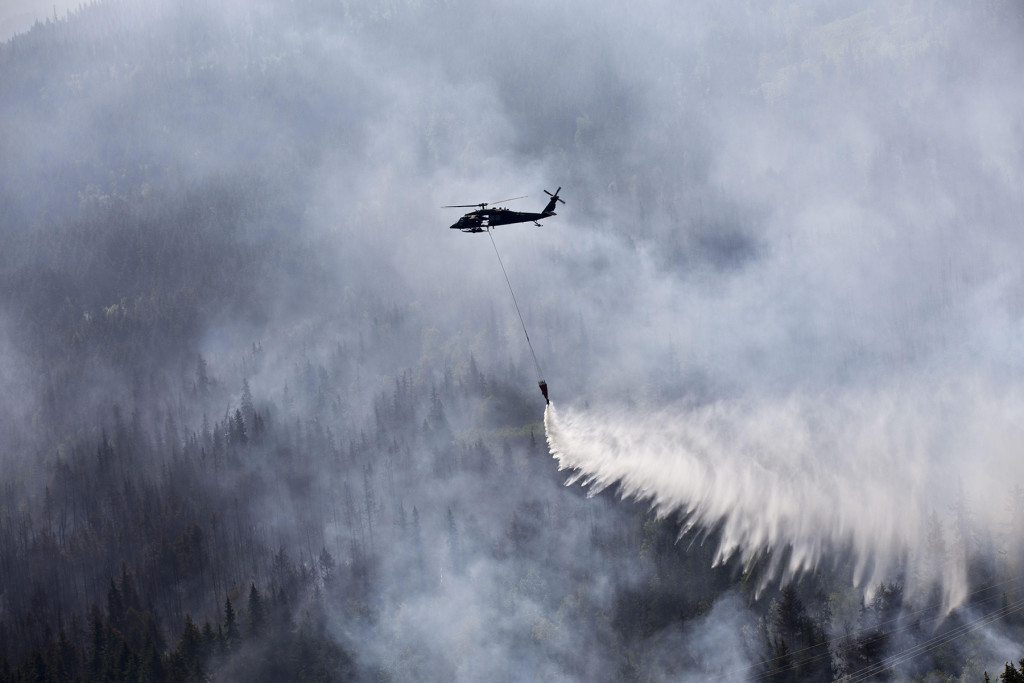
Many US National Forests and western wildland-urban interfaces are tinderboxes. Thinning projects are proven to help reduce fuel loads and reduce the risk of catastrophic wildfire, but most of the slash is burned in place; why not put this biomass to work for America’s future?

Oil has again crested the $100 mark per barrel, and petroleum prices are skyrocketing due to geopolitical instability, increasing worldwide demand, and market speculation. This is putting historic pressure on food prices, and raising the stakes of continuing America’s love affair with big oil and big ag. For example, corn used to make ethanol consumed a staggering 39 percent of America’s corn crop in 2010!
Shredded tires are excellent feedstock for producing our clean fuel.
Bottom Line:
- America needs a cleaner transportation fuel beyond corn ethanol.
- America needs good paying, non-menial jobs.
- America needs local involvement in energy creation.
- America needs greener, cleaner businesses.
- America needs green energy independence.
- America’s governments need tax revenue.
- America needs to clean up its trash and fossil fuels the smart way.
- America needs to boldly move into the clean liquid energy frontier.
What fuel will power this revolution? Think it’s time to clean up fossil energy’s dirty act?


Ten Million People